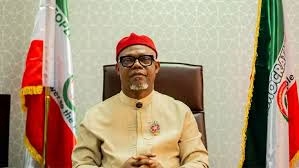
Senator Barinada Barry Mpigi Biography: Family, Career, Net Worth, and Legacy (2026)
Senator Barinada Barry Mpigi Biography: Senator Barinada Mpigi, widely known as Barry Mpigi, was a distinguished Nigerian politician who left an indelible mark on Nigerian politics. Representing Rivers South-East Senatorial District in the Nigerian Senate, his legacy continues to influence discussions on electoral reform and community development in the Niger Delta region.
Born on June 22, 1961, Mpigi’s career in the National Assembly began in the House of Representatives and continued with his impactful work in the Senate. A fierce advocate for electoral transparency and resource allocation in the Niger Delta, he became a champion for his people’s rights. Sadly, Senator Barry Mpigi passed away on February 19, 2026, at the age of 64, leaving behind a legacy that will endure in Nigerian politics.
In this biography, we dive deep into Senator Mpigi’s personal life, career achievements, net worth, and his influence on Nigerian governance.
Senator Barinada Barry Mpigi Biography
Full Name: Barinada Mpigi
Age: 64 (Born June 22, 1961)
Occupation: Senator, representing Rivers South-East Senatorial District
Net Worth: Unofficial estimates based on his career in public service, with no confirmed figures.
Senator Mpigi was recognised as an influential public servant who served Nigeria with integrity and commitment. From his early years as a lawmaker to his role as a senator, he was at the forefront of numerous legislative reforms, particularly in electoral integrity and resource control for the Niger Delta region.
Senator Barinada Barry Mpigi Early Life and Family Background
Senator Barinada Mpigi was born in Koroma, located in Tai Local Government Area of Rivers State, Nigeria, into a prominent family. Raised amidst the political and social challenges of the Niger Delta, Mpigi was heavily influenced by the region’s ongoing struggles related to resource control and environmental degradation. These challenges sparked his passion for political reform and social justice, eventually leading him to pursue a career in public service.
His father, Sir Chief Sunday Ntorlanwa Mpigi, was a well-known figure in the local community, and his mother, Lady Victoria Mpigi, played a significant role in instilling the values of integrity and leadership in their children. Growing up in a family that placed great importance on community development, Mpigi was motivated to contribute positively to the political landscape of Nigeria.
Senator Barinada Barry Mpigi Family Life and Education
Details about Senator Mpigi’s immediate family are generally private. However, he was married to Mrs. Pat Mpigi, who supported him throughout his career. Senator Mpigi’s ability to remain focused on his work despite the pressures of public life demonstrated his family-oriented nature.
In terms of education, Senator Mpigi was a bright student from a young age. He attended Government Commercial School, Ibaa, where he completed his secondary education. Following that, he pursued a Higher National Diploma (HND) in Business Administration (Marketing) at the Rivers State College of Science and Technology (now Rivers State University), graduating in 1984. His education provided him with the foundation for his future career in public administration and political governance.
Career Journey: From the House of Representatives to the Senate
Senator Mpigi’s career in politics began in 2011 when he was elected to the House of Representatives to represent the Eleme/Tai/Oyigbo Federal Constituency. During his time in the House, he was focused on community-driven issues such as infrastructure development, education, and job creation. He was re-elected in 2016, further solidifying his position as a committed public servant.
In 2019, Senator Mpigi transitioned to the Senate, where he represented Rivers South-East Senatorial District. His role as a Senator allowed him to advocate for even broader reforms in electoral integrity, resource control, and governance.
His time in the Senate was marked by his active participation in committees and his strong advocacy for electoral reforms. Mpigi believed that technology, such as electronic voting and real-time results transmission, could reduce electoral fraud and improve the transparency of the Nigerian electoral system.
Major Achievements and Legislative Contributions
Advocacy for Electoral Reforms
One of Senator Mpigi’s most notable achievements was his vocal advocacy for electoral transparency. He strongly supported the introduction of electronic voting systems to improve the credibility of Nigerian elections. He was also an advocate for the electronic transmission of results, a reform that many believed would reduce electoral malpractices.
Focus on Infrastructure Development and Resource Control
Throughout his career, Senator Mpigi was dedicated to improving infrastructure in his constituency and the broader Niger Delta region. He worked on projects aimed at building roads, schools, hospitals, and other essential infrastructure to improve the living conditions of his constituents.
Additionally, as a representative of the Niger Delta, Mpigi was a strong advocate for resource control and environmental justice for the region. He frequently raised concerns about the exploitation of the region’s oil resources without adequate benefits to its people.
Challenges, Setbacks, and Controversies
Like many public figures, Senator Mpigi faced challenges throughout his career. His advocacy for reforms often put him at odds with entrenched political powers. In particular, his push for electoral reforms and resource control often drew political resistance from those who benefited from the status quo.
Despite these setbacks, Mpigi remained committed to his mission of improving governance in Nigeria. His integrity and dedication to public service earned him the respect of his supporters, even as he faced opposition from various quarters.
Personal Life
Senator Mpigi was known for being a private individual, with his personal life largely out of the public eye. He enjoyed spending time with his family, especially his wife, Mrs Pat Mpigi, who was a supportive partner in his political career.
Although Mpigi’s personal life was kept private, his dedication to his constituents and family was widely recognised. He was respected for maintaining a humble lifestyle despite his political status.
Senator Barinada Barry Mpigi Net Worth and Sources of Income
While the exact net worth of Senator Mpigi is not publicly available, his wealth would have primarily come from his salary as a senator and his role as a public servant. It’s important to note that Nigerian public officials earn modest salaries, and allowances for official duties and related activities often supplement their income.
There is no indication that Senator Mpigi amassed wealth outside his public duties. As a public servant, his finances were likely transparent, and no significant reports suggest any controversial sources of income.
Legacy and Influence
Senator Mpigi’s legacy lies in his dedication to public service and his commitment to the development of the Niger Delta. He was a strong advocate for electoral reforms and infrastructure development, leaving a positive mark on the Nigerian political landscape.
Although Senator Mpigi passed away in 2026, his influence continues to shape Nigerian politics, particularly in the areas of electoral integrity, community development, and resource control. His work remains a source of inspiration for politicians and activists dedicated to improving governance and transparency in Nigeria.
Lesser-Known Facts
- Youth Empowerment: Senator Mpigi was passionate about youth development in Nigeria. He encouraged young people to participate in politics and public service actively.
- Community Advocate: Mpigi was known for his close connection to the people of Rivers State, frequently engaging with local communities and ensuring their concerns were represented in the Senate.
Frequently Asked Questions (FAQs)
1. What was Senator Barry Mpigi’s main contribution to Nigerian politics?
Senator Mpigi was best known for his advocacy for electoral reforms, particularly his support for electronic voting and results transmission to improve transparency in elections.
2. When did Senator Mpigi pass away?
Senator Barry Mpigi passed away on February 19, 2026, at the age of 64.
3. What was Senator Mpigi’s role in the Niger Delta?
Senator Mpigi was a strong advocate for resource control in the Niger Delta and worked to ensure that the people of the region benefited from its oil resources.
4. What are some of Senator Mpigi’s major accomplishments?
Senator Mpigi was known for his efforts to improve infrastructure in his constituency and for his leadership in electoral reforms aimed at making Nigerian elections more credible.
5. How did Senator Mpigi impact his constituency?
Senator Mpigi worked tirelessly to ensure the development of his constituency, advocating for better infrastructure, education, and public services.
Conclusion
Senator Barinada (Barry) Mpigi was a dedicated public servant who worked for the betterment of his people and his country. Through his efforts in electoral reform, community development, and advocacy for the Niger Delta, he leaves a lasting legacy in Nigerian politics. His humble nature, integrity, and commitment to transparency set him apart as a role model for future leaders.
Stay tuned for more insights into the lives of influential Nigerian politicians and their impact on the country’s governance.