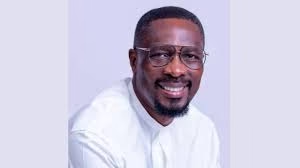
Sindile Nkangana Biography 2026: Life, Age, Death, Tribe, Family & Education, Career,
Sindile Nkangana Biography: Sindile Nkangana was a name synonymous with trust and integrity in the world of South African radio broadcasting. Throughout his distinguished career, he was not just a voice heard over the airwaves but a key figure in ensuring the public had access to news and information during one of South Africa’s most tumultuous periods. His contributions as a broadcaster, community figure, and influential voice within his region are still celebrated today, despite his relatively private personal life and the challenges he faced throughout his career.
While he may not have reached the same level of fame as other more mainstream South African public figures, his legacy remains rooted in his quiet, steadfast commitment to his craft and his community. His work extended beyond mere entertainment and information; it became a medium through which unity, identity, and resilience were expressed.
This biography delves into Sindile Nkangana’s life, from his early years in South Africa’s Eastern Cape to his influential career as a newsreader and radio personality. We will explore his journey, the challenges he faced, and the lasting impact he had on his community and the broadcasting industry.
Sindile Nkangana Biography
For those familiar with Radio Transkei, Sindile Nkangana was not just a voice. He was a trusted storyteller whose calm delivery carried the weight of responsibility during an era when reliable news was hard to come by. In an environment where government censorship loomed large, especially in the apartheid era, Nkangana’s voice offered clarity, consistency, and hope. His contributions went far beyond the role of a typical newsreader. He became a fixture in many households and a symbol of both cultural pride and journalistic integrity.
While not much about his personal life is publicly available, his professional accomplishments and the emotional resonance of his broadcasts have made him a memorable figure in the history of South African radio. This biography aims to provide a complete picture of his life’s journey, shedding light on the man behind the microphone and the indelible mark he left on the world of broadcast media.
Sindile Nkangana Early Life & Background: Roots in the Eastern Cape
Sindile Nkangana’s early life is intricately tied to the history and culture of South Africa’s Eastern Cape—a region known for its rich heritage and its central role in the anti-apartheid struggle. Although precise details of his birth and early family life remain scarce, it is widely believed that he was born and raised in Transkei, a former homeland under apartheid, which was later incorporated into the modern Eastern Cape Province.
Transkei was an area marked by political and cultural segregation during the apartheid years, with the black population confined to these so-called homelands under the apartheid system. It was here that Nkangana developed a deep connection to his community’s values, traditions, and the importance of oral communication. This region, predominantly inhabited by the Xhosa people, has a long tradition of storytelling, which would have profoundly influenced his future career in radio. The use of language as a tool for both community bonding and resistance is something that shaped Nkangana’s worldview and his subsequent work as a broadcaster.
Growing up in this culturally rich environment, Nkangana was naturally drawn to the power of voice—whether it was the elders in his community sharing stories or the local church leaders calling the congregation to worship. These early influences undoubtedly laid the foundation for his career in broadcasting.
Sindile Nkangana Family & Education
While details about Sindile Nkangana’s family life are not publicly available, it is clear that his family background played a significant role in shaping his values. It is often said that strong family units and community bonds are central to the lives of many South Africans, particularly in rural areas like Transkei. The sense of duty to one’s community, coupled with a cultural reverence for elders and educators, likely informed Nkangana’s sense of responsibility as a public figure.
In terms of his education, Nkangana’s academic journey would have mirrored that of many young South Africans during apartheid. Access to quality education was limited, especially in the homelands, where resources were scarce, and education often catered to the needs of the apartheid system rather than fostering independent thought. However, like many of his peers, Nkangana made the most of the educational opportunities available to him. He likely attended local schools where the foundations of literacy, public speaking, and communication were nurtured. These early educational experiences would have provided the tools necessary for him to transition into his career in media.
Sindile Nkangana Career Journey: A Journey Into Broadcasting
Sindile Nkangana’s career in radio broadcasting began in the 1970s, a time when the apartheid government heavily regulated South African media. As with many black South Africans working within the media industry at the time, Nkangana’s work had to be navigated carefully due to the restrictions placed on freedom of speech. It was a time when radio stations like Radio Transkei—part of the state-run network for the homelands—provided one of the few platforms where local communities could access news that was relevant to them, delivered in their own languages.
Nkangana’s rise to prominence as a newsreader and radio personality was not immediate. Like many others in the industry, his career was built upon years of hard work, honing his craft behind the scenes. Broadcasting during this period required a great deal of discretion, as journalists had to balance the demands of reporting the truth with the realities of government censorship.
By the 1980s, Nkangana had become a household name in the Eastern Cape region, especially within Xhosa-speaking communities. He gained a reputation not only for his distinctive voice but also for his professionalism and impartiality—traits that were highly valued during a time of political instability. His broadcasts were characterized by a tone that was both calm and authoritative, a style that resonated with listeners seeking reliable information during uncertain times.
Nkangana’s ability to connect with his audience was one of the key factors that contributed to his success. He understood the unique role radio played in shaping public opinion, particularly in rural areas where other forms of media were inaccessible. His broadcasts provided essential news, weather updates, and community announcements, offering a steady voice amidst the turbulence of the era.
Sindile Nkangana’s Death: A Farewell to a Trusted Voice
The passing of Sindile Nkangana on January 12, 2026, marked the end of an era for South African radio, particularly for the listeners of Radio Transkei. Nkangana, who had long been a trusted figure behind the microphone, died after a prolonged battle with an undisclosed illness. His death sent shockwaves through the broadcasting community, especially within the Eastern Cape, where his voice had been a staple for decades.
For many who grew up listening to his news broadcasts, Nkangana was not just a newsreader but a symbol of credibility and stability. His calm, reassuring voice had become synonymous with reliable information, and for his loyal audience, his death represented the loss of a familiar, comforting presence in their daily lives.
News of his passing was met with an outpouring of tributes from both listeners and colleagues, many of whom expressed their deep gratitude for the integrity and professionalism he brought to South African radio. His colleagues at Radio Transkei, where he had spent most of his career, honored his contributions by reflecting on the values he instilled in the station’s ethos. Nkangana’s death, while deeply mourned, also served as a reminder of the lasting impact that broadcasters like him have on their communities, long after they are gone.
Though his time on air ended too soon, Sindile Nkangana’s legacy as a voice of integrity and a steadfast presence in South African media continues to live on through the many lives he touched throughout his career.
Sindile Nkangana’s Age: A Life Marked by Wisdom and Experience
At the time of his passing on January 12, 2026, Sindile Nkangana was believed to be in his late 50s or early 60s. While precise details about his birth date are not widely documented, his age at the time of his death reflects a life filled with extensive experience in broadcasting and a deep connection to the communities he served.
Nkangana’s decades-long career in radio, particularly with Radio Transkei, meant that he had spent much of his life shaping the media landscape of South Africa during pivotal moments in its history, including the apartheid era and the years following its end. His age was not only a marker of his professional longevity but also a reflection of the wisdom and understanding he brought to his work.
Throughout his career, Nkangana’s voice became a cornerstone of local media, earning him respect across generations of listeners who grew up with his broadcasts. His age and experience allowed him to guide his audience with a sense of authority and empathy, making his voice an enduring presence in South African households. Even after his death, his age serves as a testament to the years he dedicated to his craft and to the lasting impact he made in his community.
Significant Achievements & Notable Works
While Sindile Nkangana’s name may not be widely recognized outside of South Africa, his achievements in broadcasting have had a lasting impact on the country’s media landscape. His work with Radio Transkei helped bring a local voice to the global media dialogue, giving underrepresented communities a platform to share their stories. Some of his most notable contributions include:
- Pioneering Community Radio: Nkangana’s work at Radio Transkei, a station that was critical for the region’s indigenous population, placed him at the forefront of community broadcasting during a time when such platforms were essential for local and cultural representation. He helped pave the way for the development of community-centered radio stations in post-apartheid South Africa.
- Trust and Credibility: As a news reader, Nkangana became known for his clear, precise delivery and impartiality. This earned him the trust of his listeners, who relied on him for accurate and relevant information. His dedication to his craft elevated the standards for journalism in South Africa’s indigenous language media.
- Cultural Representation: Nkangana was part of a small group of broadcasters who recognized the importance of using local languages in the media. His work helped ensure that the Xhosa language remained prominent in regional broadcasts, fostering cultural pride and maintaining linguistic identity.
Challenges, Setbacks, and Controversies
The primary challenge that Nkangana faced in his career was the political environment in which he worked. As a broadcaster in the apartheid era, Nkangana had to navigate the minefield of government censorship and state control. His ability to maintain journalistic integrity while still working within these constraints was a significant feat.
In addition to the political pressures, financial challenges also plagued broadcasters in the homeland territories, where resources for media operations were limited. Despite these obstacles, Nkangana remained steadfast in his commitment to providing his audience with credible, engaging content. His ability to maintain professionalism despite external pressures is one of his most significant accomplishments.
Sindile Nkangana Personal Life: A Man of Family and Faith
Sindile Nkangana’s personal life has remained relatively private. However, it is known that he was a family man whose dedication to his loved ones was central to his identity. His community ties, grounded in Xhosa culture, were foundational to his approach to work and life. As a public figure, he balanced his professional life with his personal commitment to his family, church, and community. His relationships and involvement in local activities reflected a man who valued connection, tradition, and service.
Sindile Nkangana Net Worth & Income Sources
Given the nature of his career as a public service broadcaster, it is unlikely that Sindile Nkangana amassed significant wealth during his life. His income would have been primarily derived from his work at Radio Transkei, where he likely received a modest salary consistent with other journalists in the region at the time. Broadcasting in South Africa, particularly during the apartheid years, was not a career that garnered widespread financial reward.
However, it is essential to note that Nkangana’s legacy is measured not in wealth but in the lasting impact he had on his community and the industry. His influence was built upon years of steady work, integrity, and a commitment to providing a voice for his people.
Philanthropy, Influence, and Legacy
While detailed records of philanthropic endeavors by Nkangana are sparse, it is clear that his influence extended far beyond broadcasting. His legacy is deeply rooted in his ability to bring people together through the medium of radio, offering them not just news but a sense of community and shared purpose.
His work as a cultural ambassador for the Xhosa people has influenced many aspiring broadcasters and journalists. Through his commitment to local language programming and his ability to bridge the gap between information and entertainment, Nkangana has left an indelible mark on South African radio and journalism.
Lesser-Known Facts
- He was a pioneer of Xhosa-language broadcasting: At a time when apartheid sought to suppress local languages, Nkangana championed the use of Xhosa on the airwaves, giving voice to his community.
- Radio was his life’s work: Nkangana’s career spanned several decades, and he worked tirelessly to build trust with his audience, which became his most outstanding achievement.
- He faced tremendous political pressure: Working as a newsreader during the apartheid era meant constantly navigating political pressures, censorship, and government restrictions, which made his role even more crucial.
FAQs
- Who was Sindile Nkangana?
- Sindile Nkangana was a prominent South African broadcaster known for his role as a newsreader at Radio Transkei.
- What made his broadcasts unique?
- Nkangana was known for his clear, authoritative voice and his ability to connect with his audience through community-centered content.
- What challenges did he face during his career?
- Nkangana faced political censorship, government oversight, and the limitations of working in a homeland territory under apartheid.
- What is his legacy?
- Nkangana’s legacy is one of cultural representation, journalistic integrity, and his role in helping preserve the Xhosa language through radio.
- How did he contribute to South African radio?
- Nkangana helped shape the broadcasting landscape by prioritizing local languages and community-driven content during a time of national strife.
Conclusion
Sindile Nkangana’s life and career stand as a testament to the power of voice and media in times of struggle. His work not only informed but also strengthened the cultural fabric of his community. Through his unwavering commitment to truth and his dedication to providing relevant, trusted information, he earned the respect and admiration of generations.
Though his name may not be as well-known as some of South Africa’s more visible figures, Nkangana’s influence continues to resonate with those who remember the role he played in shaping local broadcasting during a challenging period in the country’s history.