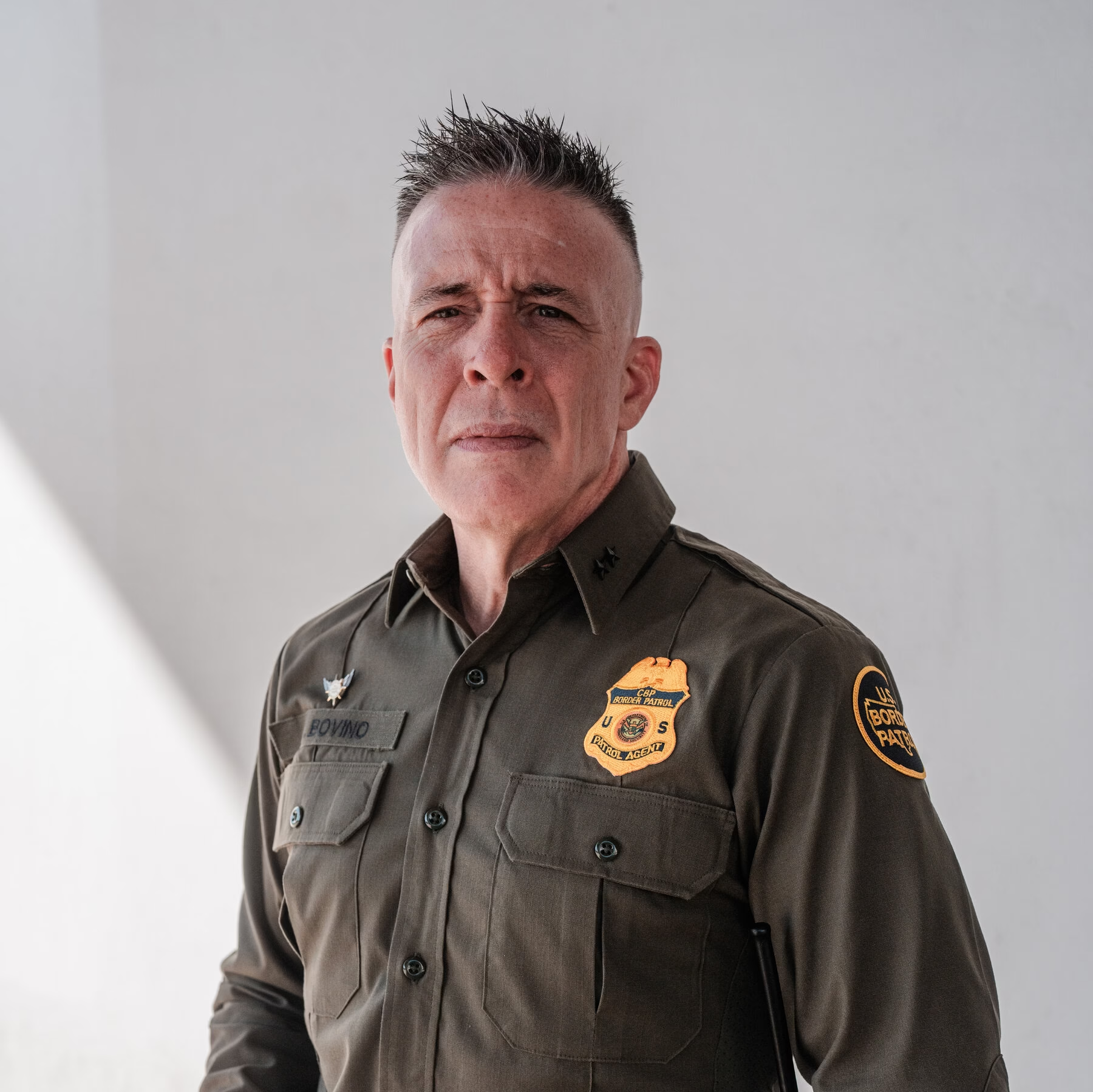
Greg Bovino Biography 2026: Power, Policing, and the Making of a Controversial American Law Enforcement Figure
Greg Bovino Biography: In the modern history of American law enforcement, few figures have embodied the intensity of national debates over immigration, federal authority, and civil liberties as clearly as Greg Bovino. Over nearly three decades of service within the United States Border Patrol, Bovino rose from a rank-and-file federal agent to one of the most visible—and polarizing—figures associated with aggressive immigration enforcement in the United States.
Unlike many career officials who operate primarily outside the public eye, Bovino became a recognizable presence during a period of heightened political tension. His leadership roles, public statements, and operational decisions placed him at the intersection of policy execution and public controversy. To supporters, he represented discipline, enforcement, and clarity of mission. To critics, he symbolized the excesses of militarized policing and the erosion of constitutional boundaries.
This biography examines Greg Bovino’s life and career in full context—tracing his upbringing, education, professional ascent, and the controversies that came to define his public reputation. Rather than casting judgment, it aims to provide a comprehensive, factual portrait of a man whose career reflects broader tensions in American governance and law enforcement.
Greg Bovino Biography
Gregory Kent Bovino was born on March 27, 1970, in San Bernardino County, California, a region shaped by postwar suburban growth, economic transition, and proximity to major transportation and migration corridors. Though California was his birthplace, Bovino did not spend most of his childhood there. During his early years, his family relocated to Blowing Rock, North Carolina, a small mountain town in the Appalachian region.
Blowing Rock presented a stark contrast to Southern California. The town’s slower pace, tight-knit community, and rural surroundings offered a different cultural framework—one grounded in personal responsibility, local relationships, and visible authority structures. These formative years in North Carolina appear to have played a central role in shaping Bovino’s worldview.
Public accounts suggest Bovino’s childhood was not without hardship. His father, Michael Bovino, owned a bar, and family challenges—including a serious car accident involving his father—introduced early instability. Such experiences often shape how individuals perceive order, risk, and authority, though Bovino himself has spoken sparingly about his early home life.
What is clear is that Bovino developed an early fascination with law enforcement and uniformed service. Friends and classmates later recalled his interest in structure, discipline, and leadership—traits that would become hallmarks of his professional persona.
Greg Bovino Family & Education
Bovino attended Watauga High School in Boone, North Carolina, graduating in 1988. During his high school years, he participated in athletics, including wrestling, which reinforced physical endurance, mental toughness, and hierarchical discipline—qualities often associated with law enforcement careers.
Following high school, Bovino enrolled at Western Carolina University, where he pursued a Bachelor’s degree in Natural Resource Conservation. The choice of field reflected an interest in land management, environmental systems, and government oversight—areas that intersect with federal regulatory roles. He performed well academically and appeared on the dean’s list, signaling a level of seriousness and focus often overlooked in portrayals of enforcement officials.
After completing his undergraduate degree in 1993, Bovino continued his education at Appalachian State University, earning a Master’s degree in Public Administration. This graduate training provided him with a deeper understanding of bureaucratic systems, public policy implementation, and organizational leadership—skills that later became essential as he moved into senior federal roles.
His educational background distinguishes him from many frontline agents, positioning him as both an operational and administrative professional within federal law enforcement.
Greg Bovino Career Journey
Entering Federal Law Enforcement
Greg Bovino’s professional law enforcement career began at the local level with the Boone Police Department in North Carolina. This early experience grounded him in community-based policing before he transitioned to federal service.
In 1996, Bovino joined the United States Border Patrol, completing training at the Border Patrol Academy. He was initially assigned to El Paso, Texas, one of the busiest and most operationally complex sectors along the U.S.–Mexico border. This environment exposed him to large-scale migration, cross-border crime, and the logistical demands of federal enforcement.
From the outset, Bovino demonstrated a willingness to operate in high-pressure settings. Over the following years, he served in multiple border regions, gradually earning promotions that reflected both operational competence and leadership ambition.
Advancing Through the Ranks
By the mid-2000s, Bovino had moved beyond frontline patrol roles into supervisory and administrative positions. He served in leadership capacities in Yuma, Arizona, and later became Patrol Agent in Charge in Blythe, California. This role required balancing enforcement priorities with community relations and interagency coordination.
His career continued to advance as he took on sector-level leadership roles, including assignments in New Orleans and El Centro, California. These postings expanded his influence beyond border zones into broader regional operations, particularly as immigration enforcement increasingly intersected with interior jurisdictions.
Throughout this period, Bovino built a reputation as a strict enforcer of policy, favoring clarity of command and decisive action. He was known internally for emphasizing chain-of-command discipline and operational readiness.
National Visibility and Expanded Authority
Greg Bovino’s public profile changed dramatically during the mid-2020s, when he emerged as a central operational figure in nationwide immigration enforcement efforts. Though not formally designated by statute, he was widely described as acting in a commander-at-large capacity—overseeing or directing Border Patrol operations in cities far from the southern border.
Under this expanded remit, Bovino became involved in enforcement actions in major urban areas such as Los Angeles, Chicago, Sacramento, Charlotte, and Minneapolis. These deployments represented a significant shift in how Border Patrol resources were used, extending their presence into interior enforcement traditionally handled by other agencies.
Bovino’s visibility increased not only due to operational scope but also because of his public demeanor. He became known for highly staged enforcement appearances, visible tactical gear, and assertive language when discussing immigration policy. For supporters, this projected strength and resolve. For critics, it raised alarms about militarization and the blending of law enforcement with political messaging.
Significant Achievements & Notable Roles
From a strictly career standpoint, Greg Bovino’s achievements are substantial:
- Nearly 30 years of federal service within the U.S. Border Patrol
- Leadership roles across multiple high-priority border and interior regions
- Oversight of large-scale, multi-jurisdictional enforcement operations
- Influence over national immigration enforcement strategy during a politically volatile period
His rise reflects both personal ambition and institutional trust placed in him by senior officials. Regardless of public opinion, Bovino became one of the most influential operational leaders in modern Border Patrol history.
Challenges, Setbacks, and Controversies
Greg Bovino’s career cannot be discussed without addressing the controversies that accompanied his rise.
Legal and Judicial Criticism
Several enforcement operations linked to Bovino’s leadership were challenged in court. Federal judges issued rulings questioning the legality of specific tactics, particularly regarding the use of force, detention practices, and constitutional protections. While not all rulings resulted in formal sanctions, judicial language in some cases was unusually critical.
Public Backlash and Media Scrutiny
Bovino became a frequent subject of investigative reporting. Civil rights organizations, legal scholars, and community leaders accused his operations of racial profiling and excessive force. His prominent presence—often amplified through media coverage—made him a focal point for broader criticism of federal immigration enforcement.
A fatal incident involving a civilian during an enforcement operation in Minneapolis intensified scrutiny. Although responsibility was complex and subject to investigation, public reaction led to Bovino’s reassignment from specific high-profile roles.
Institutional Tensions
Reports also indicated internal concerns within federal agencies about the concentration of authority and the optics of Bovino’s leadership style. These tensions highlighted longstanding debates over the balance between enforcement effectiveness and civil liberties.
Greg Bovino Personal Life
Greg Bovino has kept much of his personal life private. Public records indicate that he is married and has children, but he has largely avoided discussing family matters in interviews or public appearances.
Outside of work, he is known to value physical fitness and outdoor activities, consistent with his early background in conservation studies and athletics. Unlike some public figures, Bovino has not cultivated a personal brand beyond his professional identity.
Greg Bovino Net Worth & Income Sources
Greg Bovino’s income has primarily come from his long-term federal employment. As a senior Border Patrol official, his compensation would include:
- Federal salary based on GS or executive pay scales
- Longevity-based benefits and pension eligibility
- Standard federal retirement and healthcare benefits
There is no verified public information indicating private business interests, speaking fees, or commercial endorsements. Any estimates of net worth remain speculative and are best understood as consistent with a senior federal career, not private-sector wealth.
Philanthropy, Influence, or Legacy
There is no public record of Greg Bovino engaging in formal philanthropic initiatives. His influence, however, lies in institutional impact rather than charitable activity.
Bovino’s legacy will likely be defined by how historians, legal scholars, and policymakers assess the period of immigration enforcement he helped shape. His career serves as a case study in how enforcement authority expands during moments of political urgency—and the risks that accompany such expansion.
Lesser-Known Facts
- Bovino holds a graduate degree in public administration, a credential uncommon among frontline enforcement leaders
- He began his career in local policing before entering federal service
- His conservation studies background contrasts sharply with his later enforcement-heavy reputation
- He spent significant portions of his career away from public attention before becoming nationally visible
FAQs
1. Who is Greg Bovino?
Greg Bovino is a senior U.S. Border Patrol official with nearly three decades of federal law enforcement experience.
2. Why is Greg Bovino controversial?
He became controversial due to his leadership of aggressive immigration enforcement operations and subsequent legal and civil rights challenges.
3. What education does Greg Bovino have?
He holds a bachelor’s degree in Natural Resource Conservation and a master’s degree in Public Administration.
4. Did Greg Bovino work outside border regions?
Yes. He played a role in interior enforcement operations in multiple U.S. cities.
5. Is Greg Bovino still active in federal service?
His exact current status has shifted over time due to reassignments; official updates depend on federal disclosures.
6. Does Greg Bovino have political ambitions?
There is no verified evidence that he has sought elected office.
Conclusion
Greg Bovino’s biography is inseparable from the era in which he rose to prominence. His career reflects the complexities of modern federal law enforcement—where authority, visibility, and accountability increasingly collide. To some, he represents firm execution of policy in turbulent times. To others, he embodies the dangers of unchecked power.
What remains clear is that Bovino’s influence on U.S. immigration enforcement is undeniable. His story offers insight not only into one man’s career but into the broader forces shaping American governance in the 21st century.
If you want this rewritten for publication, condensed, or localized for a news platform, please tell me the outlet and audience, and I’ll adapt it precisely.